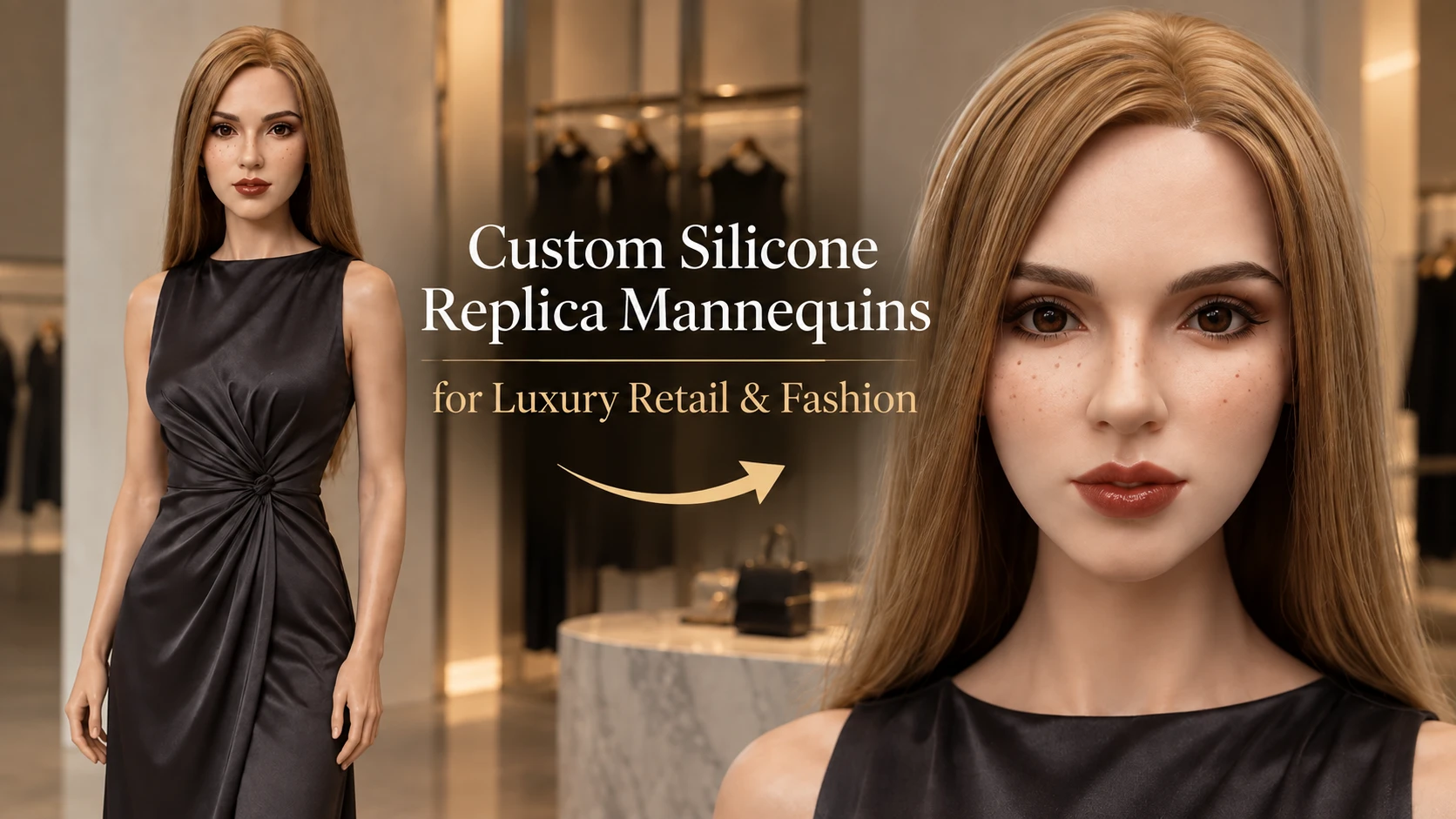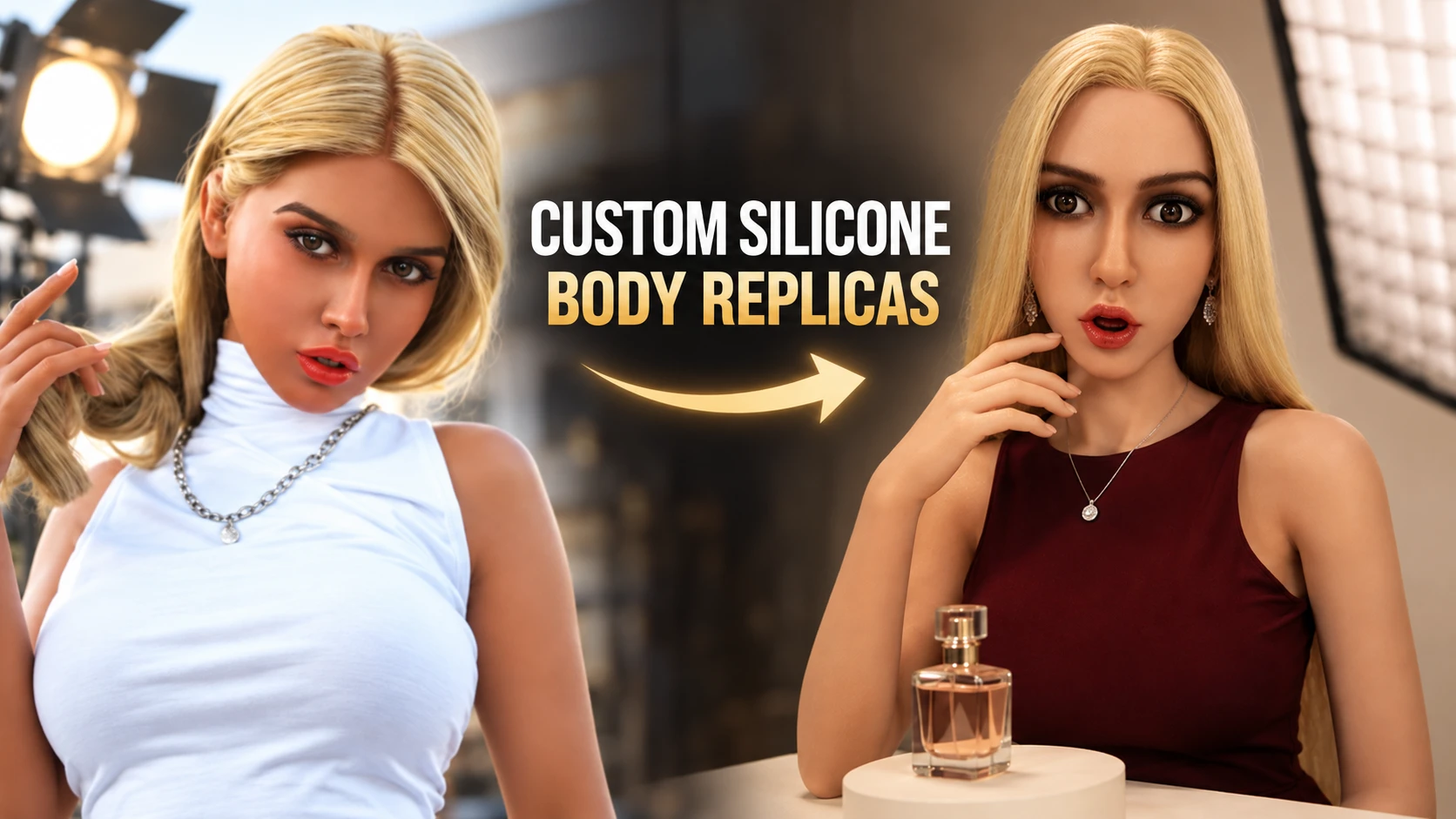
Silicone vs. Wax Figures
Wax figures have a long history in museums and portrait exhibitions. They remain a familiar way to represent historical people, celebrities, and recognizable characters, especially in permanent indoor displays where the figure is mainly viewed rather than handled.
Today, silicone replica figures provide another option. Both materials can produce highly detailed human figures, but they differ in surface behavior, flexibility, environmental sensitivity, and the way they are maintained and displayed.
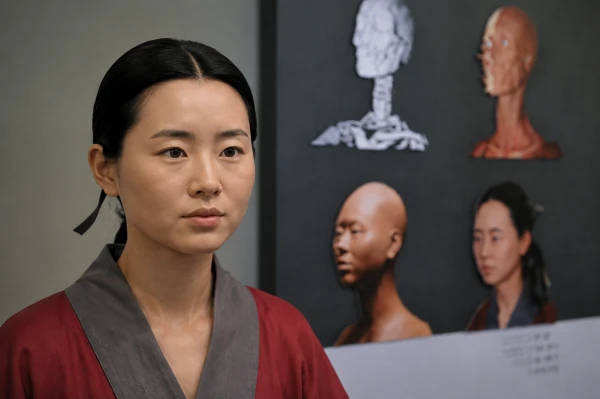
Realistic silicone figures designed for museums, historical exhibitions, and cultural display projects.
Why Museums Still Use Wax
Wax remains suitable for many traditional museum displays because artists can create recognizable facial shapes, expressions, skin coloration, hair, and period-specific details. It also has a strong historical association with celebrity and portrait museums, making the material itself part of the familiar wax-museum experience.
However, wax-based materials require careful environmental control. Elevated temperatures can soften or deform some waxes, which is one reason display conditions, lighting, and heat sources matter in collections containing wax-based objects.
This does not mean wax is outdated. For a permanent indoor exhibition with controlled conditions and limited physical contact, a well-made wax figure can still be an effective choice.
Why Choose Silicone?
Silicone offers a different approach when a project prioritizes a flexible, skin-like surface and detailed human appearance.
A silicone replica can reproduce subtle characteristics such as pores, wrinkles, freckles, veins, age spots, facial lines, and variations in skin tone. These details are particularly useful when recreating a specific historical person or family member, because realism often depends on preserving individual characteristics rather than making the figure look perfectly smooth or idealized.
Certain platinum-cure silicone materials are also valued for flexibility and long-term stability in display, sculpture, prosthetic, and museum-related applications. Actual performance still depends on the specific silicone formulation, pigments, construction, handling, and exhibition environment, so museums should evaluate the finished figure rather than assuming that all silicone materials behave identically.
Silicone vs. Wax
Recreating People From Photos
A silicone replica can be developed from photographs and other visual references, but the quality of the result depends heavily on the information those references provide.
For a well-documented person, museums or families may have photographs from several angles, videos, portraits, measurements, clothing records, or other archival materials. Older historical figures, however, may be known only through a few photographs, paintings, sculptures, or written descriptions.
The first step is therefore not simply collecting as many images as possible. It is identifying which details are clearly documented and which parts of the person's appearance still require interpretation.
What Photos Work Best?
The most useful references show the person from several angles.
Front-facing photographs help establish features such as eye spacing, mouth width, face shape, and general facial proportions. Profile and three-quarter views provide additional information about the forehead, nose projection, chin, jawline, ears, and overall head shape.
Images from a similar period of the person's life are especially useful. If photographs from very different ages are mixed together, age-related changes in the face, hairstyle, weight, or skin may create conflicting references.
Videos can also be helpful when available because they show how the face and head appear from changing angles.
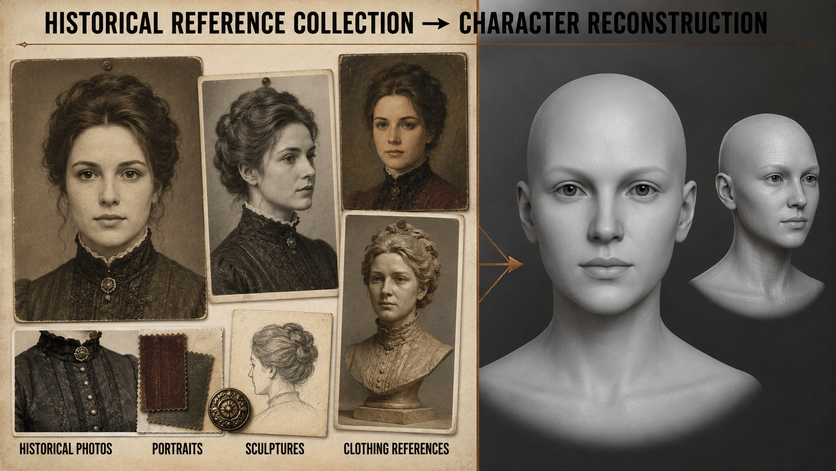
Historical materials collected for accurate character reconstruction.
What If Photos Are Limited?
Not every memorial or historical project begins with a complete photographic record.
A single frontal photograph may provide useful information about the eyes, nose, mouth, and overall face shape, but it cannot fully confirm features that are mainly visible from the side, such as ear shape, head depth, or the exact profile of the nose and jaw.
In these cases, additional evidence may help. Portraits, sculptures, family archives, documented measurements, clothing records, or other images from the same period can provide context.
The important point is to separate documented features from interpreted features. If a detail cannot be verified from the surviving references, it should not be treated as historically certain.
This is particularly important for museums, where visual realism should not replace historical transparency.
Which Age Should Be Recreated?
A replica does not always need to show the person at the oldest or final stage of their life.
For memorial projects, the family may prefer the age at which they remember the person most strongly. For a museum, the most appropriate choice may be the period connected with the exhibition—for example, a writer during their major career period or a founder during the early years of a company.
The selected age affects more than wrinkles. It can influence facial contours, hairstyle, hair color, body proportions, skin details, clothing, and expression.
For this reason, the target age or historical period should be agreed before detailed modeling begins.
Reviewing the 3D Model
Once the references have been organized, they can be translated into a 3D model.
This stage allows the face shape, proportions, age characteristics, expression, and pose to be reviewed before the physical replica is produced. Front, profile, and three-quarter views of the model can be compared with the available photographs to identify obvious differences.
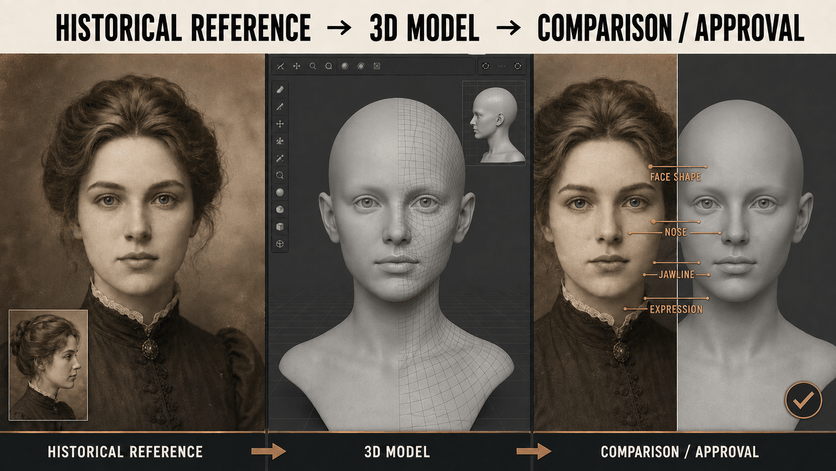
Historical reference and 3D model used before production.
For museum projects involving curators, historians, family representatives, or other stakeholders, this is also an important approval stage. Major differences in facial structure, age, expression, or proportions are easier to address before mold making and silicone production begin.
A strong replica project therefore starts with realistic expectations: better references usually allow more features to be reproduced with confidence, while missing information should be identified rather than hidden.
What Makes a Replica Look Real?
A realistic replica is not created by adding as many details as possible. What matters most is whether the face, age, expression, skin, hair, and body language all belong to the same person.
For museum and memorial projects, visitors often recognize the overall character before they notice individual pores or wrinkles. This means facial likeness and expression usually matter more than simply maximizing surface detail.
Facial Likeness
The face is usually the strongest part of a person's identity. Overall face shape, eye spacing, nose structure, mouth width, jawline, forehead, ears, and relative proportions all contribute to whether a replica is recognizable.
Age should also be preserved rather than softened automatically. A historical person may have deeper lines around the eyes, a softer jawline, a receding hairline, or other features that are essential to their identity.
For this reason, a museum replica should not aim to make the subject look younger or more attractive unless that is part of the approved historical direction. The objective is resemblance, not beautification.
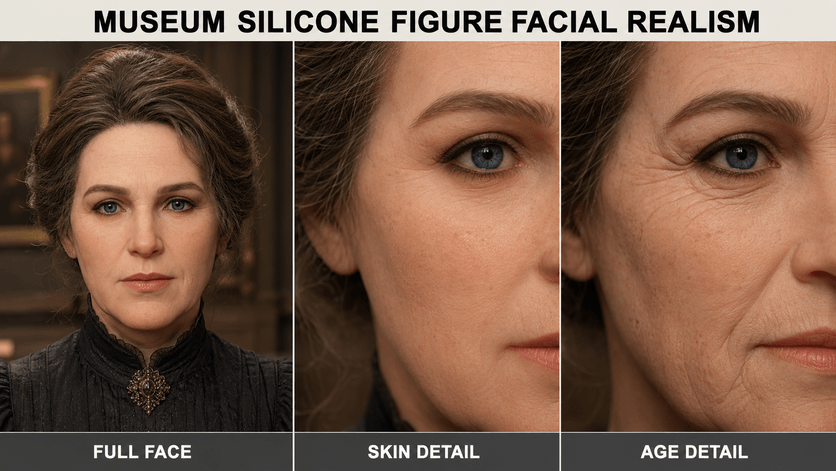
Realistic skin texture and age details on a silicone figure.
Realistic Skin Details
Real human skin is not perfectly smooth or evenly colored. Subtle pores, fine lines, freckles, veins, wrinkles, age spots, and changes in skin tone can make a replica feel more natural.
These details should reflect the person being recreated. An elderly writer may need age lines and softer facial contours, while a historical worker may require more visible texture on the hands or face.
However, excessive detail can have the opposite effect. Overly strong veins, exaggerated pores, heavy coloration, or glossy skin may make a replica look artificial. The goal is controlled imperfection rather than maximum texture.
Eyes and Expression
Eyes can strongly influence whether a replica feels natural or unsettling. Even a highly detailed face may look artificial if the gaze does not match the pose or surrounding scene.
A seated writer may appear to look toward a book or desk. A formal memorial figure may use a calm, neutral expression. A historical worker may need a head direction and gaze that connect naturally with the tool or object in front of them.
Expression should therefore be decided together with pose and exhibition context, rather than treated as a separate facial detail.
Hair and Small Details
Hair, eyebrows, eyelashes, facial hair, hands, and fingernails are smaller elements, but they can strongly affect the finished identity.
A distinctive hairstyle, beard, mustache, or receding hairline may be essential for recognizing a historical person. Hands also become especially important when the figure holds a book, document, tool, or personal object.
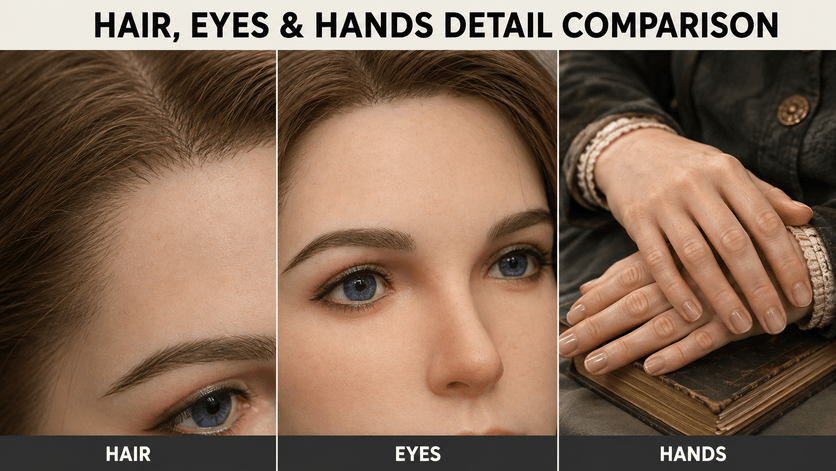
Detailed hair, eyes, and hands of a realistic silicone figure.
The most convincing replica is therefore not the one with the greatest number of visible details. It is the one in which facial structure, age, skin, eyes, expression, hair, and small features all support the same recognizable person.
Where Replica Figures Are Used
Silicone replica figures can be used wherever an exhibition needs more than a generic human form. Their main value is in representing a specific person, occupation, historical moment, or personal memory within a three-dimensional setting.
The same type of replica may therefore serve very different purposes. A museum may use one to explain history, while a memorial project may focus more strongly on preserving the appearance and presence of an individual.
Museums & Historical Exhibitions
Historical museums can use life-size replica figures alongside artifacts, photographs, furniture, machinery, documents, and reconstructed environments.
For example, an industrial exhibition might place a worker beside preserved machinery, while a local history museum could recreate a merchant inside a period shop. Cultural museums may use figures to demonstrate traditional occupations, clothing, tools, or everyday activities that are difficult to communicate through objects alone.
When the exhibition represents a known historical person, the figure should be developed around that individual's references rather than using a generic mannequin face with historical clothing.
Costume, hairstyle, posture, props, and surrounding objects should all support the same historical context.
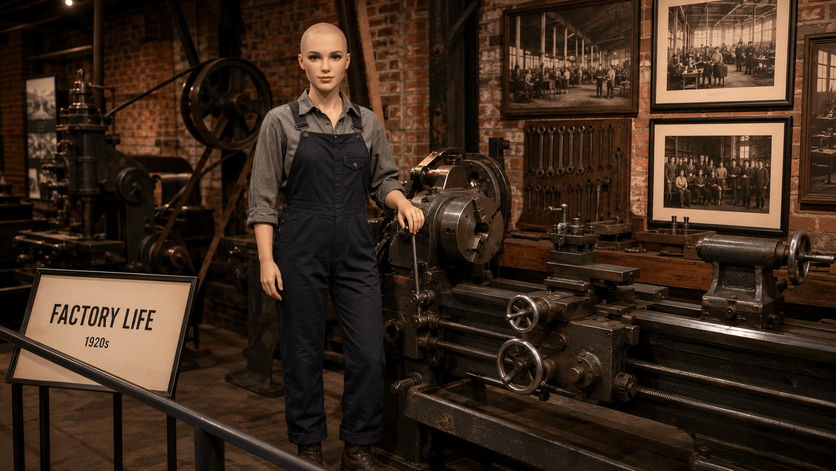
A lifelike silicone figure integrated into a historical museum scene.
Memorial Halls & Personal Memorials
Memorial displays often focus more closely on one person's life and identity.
A historical writer might be shown seated at a desk with books and manuscripts. A scientist could appear within a reconstructed working environment, while a community leader or family member might be represented with clothing, furniture, photographs, or personal objects associated with a particular period of life.
For these projects, the replica should not exist separately from its context. Age, hairstyle, expression, clothing, posture, and surrounding objects should work together to communicate who the person was and which period of their life is being remembered.
This is particularly important for personal or family memorial projects, where emotional recognition may be just as important as visual detail.
Royal, Celebrity & Public-Figure Displays
Kings, queens, royal families, artists, writers, scientists, political leaders, explorers, and other recognizable people may require a more character-specific presentation.
A royal figure, for example, may be recognized not only by facial appearance but also by hairstyle, formal clothing, jewelry, furniture, ceremonial objects, and posture. The same person shown in a private study would require a very different presentation from a formal ceremonial scene.
Celebrity or public-figure exhibitions create a similar challenge: visitors may already be familiar with the person's appearance, so the replica needs to feel visually consistent with the period and context being represented.
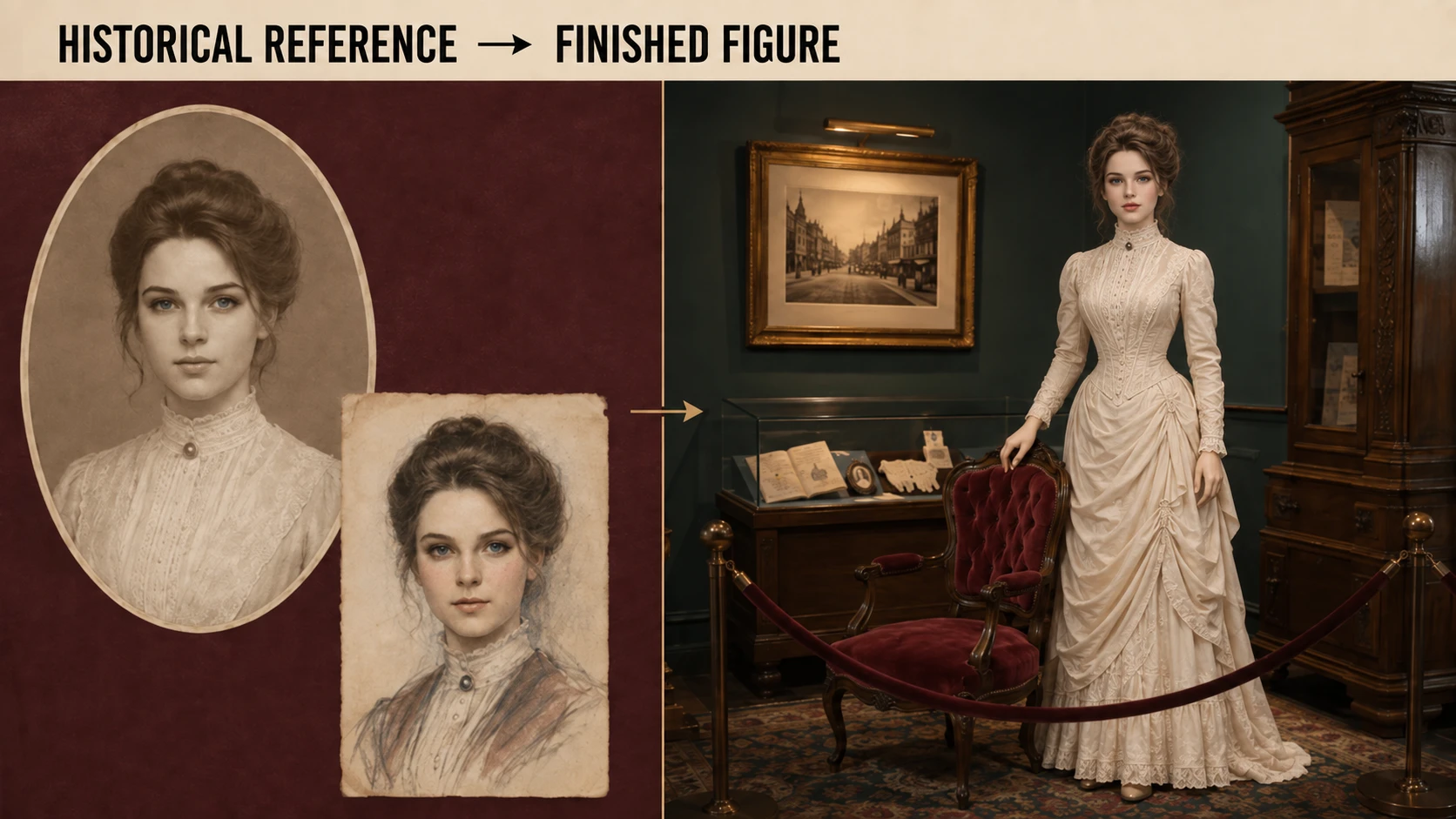
Historical references compared with the finished silicone figure.
Corporate Museums & Heritage Displays
Corporate museums and heritage centers can also use replica figures to show the people behind a company's history.
A founder might be recreated at an early office desk surrounded by original documents or products. An industrial company could reconstruct an earlier production environment with workers beside historical machinery, while a retail brand might recreate an early shop with a founder or salesperson inside the scene.
In these cases, the figure works best when it supports documented company history rather than acting as a decorative mannequin.
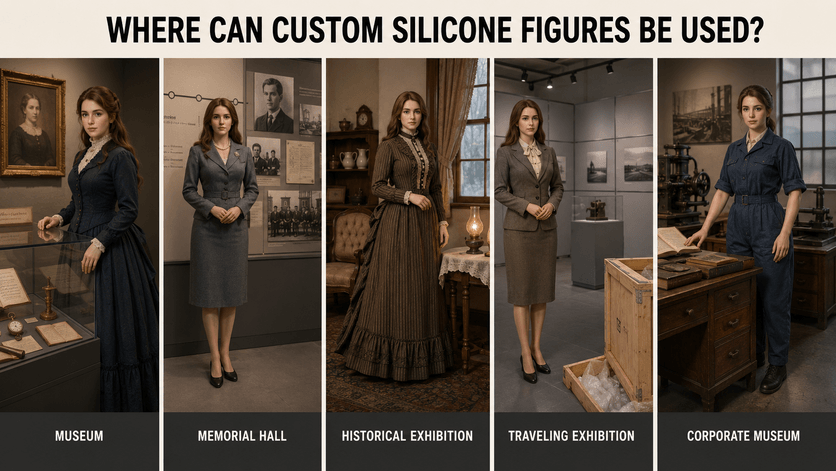
Common applications for custom silicone figures in exhibitions.
Whether the project is a public museum, memorial hall, royal exhibition, family collection, or corporate heritage display, the same principle applies: the replica should support a specific person and story rather than simply fill an empty exhibition space.
How Replica Figures Are Made
Once the reference direction and 3D model have been approved, the project can move from digital reconstruction into physical production.
At this stage, the objective is to preserve the approved facial structure, body proportions, age, pose, and character identity while turning the digital model into a life-size silicone replica. The exact production method can vary by project, but the main stages generally include mold preparation, silicone production, assembly, surface coloration, hair work, detailing, and final inspection.
From 3D Model to Mold Preparation
The approved 3D model establishes the physical form that the production team needs to reproduce.
Before mold making begins, major dimensions, facial proportions, body shape, and pose should already be confirmed. Large changes become more difficult once the project has entered physical production, which is why the earlier 3D approval stage is so important.
The confirmed form is then prepared for mold production. Depending on the figure and manufacturing method, different sections may be produced separately before being assembled into the final character.
For a museum or memorial replica, the mold should preserve the major characteristics already approved in the digital model rather than introducing a new interpretation at this stage.
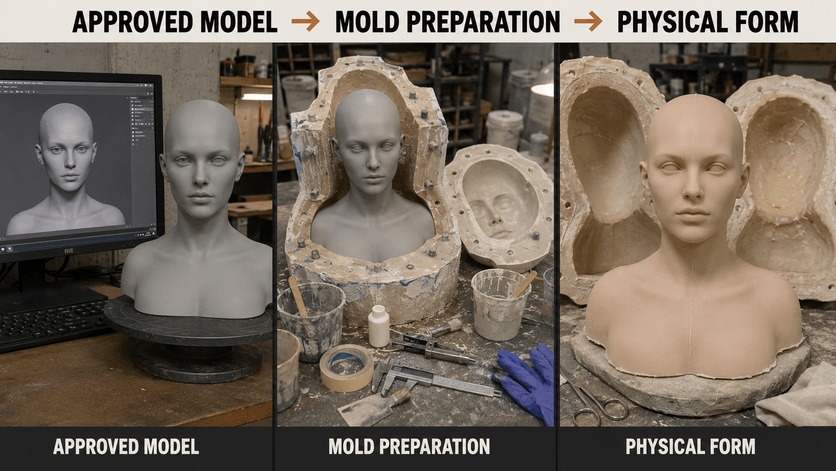
From approved model to mold preparation and physical form.
Silicone Production & Assembly
The next stage creates the physical silicone form.
Silicone reproduces the facial and body contours established during modeling, while the internal structure supports the intended pose and installation requirements. A standing figure may require different structural planning from a replica that will remain seated at a desk or positioned permanently within a reconstructed scene.
During assembly, the major components are brought together and the overall proportions, posture, and balance can be checked before detailed finishing begins.
Scene requirements also matter. If the finished figure will sit in a specific chair, hold an object, or interact with furniture or historical equipment, those dimensions and positions should be considered during production rather than after the figure is complete.
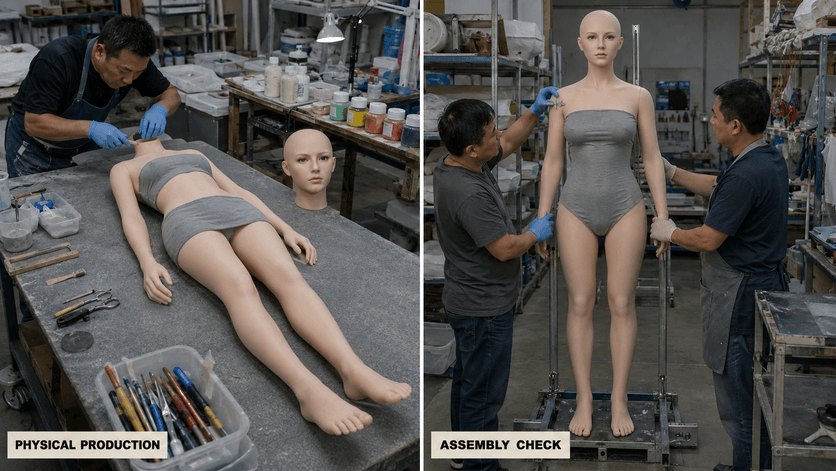
Silicone figure production and assembly in the factory.
Skin Painting, Hair & Character Detailing
After the main physical form is complete, surface finishing gives the replica much of its final visual character.
Skin coloration should not be treated as one flat color. Subtle variations around the cheeks, lips, eyes, hands, and other exposed areas can help create a more natural appearance. Depending on the approved character, wrinkles, freckles, age spots, fine veins, or other age-related characteristics may also be added.
Hair work can include scalp hair, the hairline, eyebrows, eyelashes, beard, or mustache. These details should follow the approved references because hairstyle and facial hair may be important parts of a person's identity.
Eyes are also positioned according to the intended expression and pose so that the gaze feels connected with the final display scene.
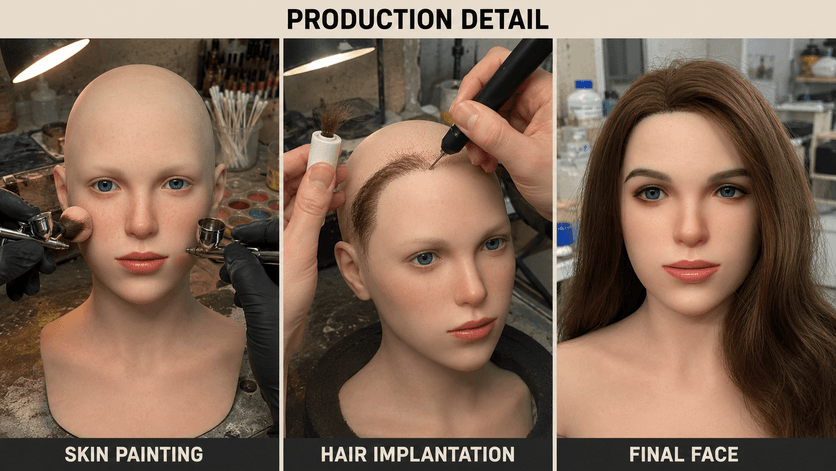
Skin painting, hair implantation, and final facial detailing.
Final Inspection Before Delivery
Before packing, the finished replica should be reviewed as a complete character rather than checking individual details separately.
The final inspection can include facial likeness, skin finish, hair, eyes, hands, body proportions, pose, and structural stability. If the figure interacts with a chair, desk, tool, display base, or other exhibition element, the relevant dimensions and positioning should also be confirmed.
Completed photographs can then be compared with the approved character direction before shipment.
For museum and memorial projects, this final stage should also confirm practical details such as installation method, final dimensions, detachable components where applicable, and any handling requirements that need to be communicated before delivery.
The production process therefore moves from approved digital form → mold → silicone figure → surface detailing → final inspection, turning the earlier visual references into a finished physical replica ready for display.
Care, Display & Longevity
A silicone replica figure should be planned not only for how it looks on opening day, but also for how it will be displayed, handled, cleaned, and transported over time.
There is no single guaranteed service life for every silicone figure. Long-term condition can be influenced by the silicone formulation, pigments and surface finish, display environment, physical handling, structural support, and maintenance practices. For museums and memorial collections, these factors should therefore be considered as part of the original exhibition plan rather than after installation.
Permanent Display & Structural Support
A permanent museum display allows the figure, support system, furniture, base, and surrounding environment to be planned as one installation.
A standing replica may require a different support solution from a seated figure or a character leaning toward a desk or workbench. The objective is to maintain a stable pose without allowing the supporting structure to unnecessarily distract from the historical scene.
Furniture dimensions should also be confirmed in advance. If a figure is designed to sit in a specific chair, hold a tool, or interact with a desk, the body position and surrounding objects should align naturally.
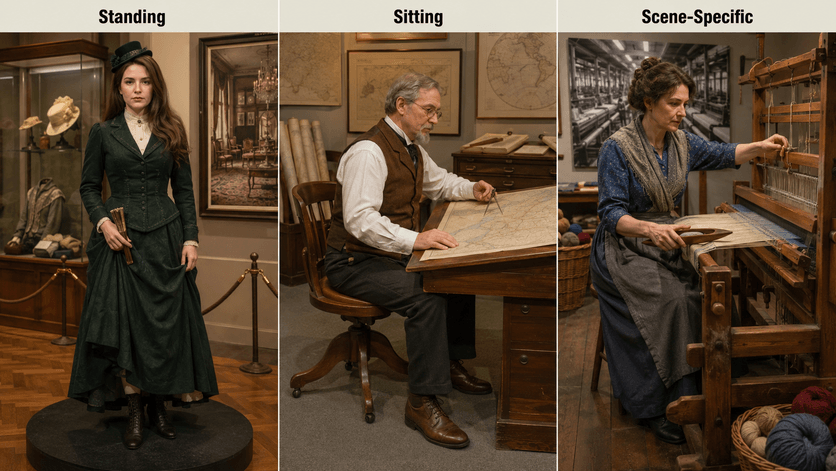
Standing, sitting, and scene-specific poses for museum displays.
Cleaning & Routine Care
Routine care should focus on protecting the finished surface rather than repeatedly deep-cleaning the figure.
Dust can accumulate on exposed skin, hair, clothing, and accessories, especially in open displays. Museums should follow the cleaning guidance supplied for the specific figure and surface finish. Untested solvents, aggressive chemicals, abrasive tools, or excessive rubbing should be avoided unless the manufacturer has specifically confirmed that they are suitable.
Hair, eyelashes, fingers, facial details, and other delicate areas should receive additional care because they may be more vulnerable to repeated handling.
A simple inspection schedule can also help identify loose accessories, changes in pose, surface contamination, or other issues before they become more difficult to address.
Light, Heat & Visitor Contact
The display environment can influence the long-term appearance of a replica.
Where practical, museums should avoid placing a figure directly beside strong heat sources or under unnecessarily intense light for extended periods. Direct sunlight and prolonged UV exposure should also be considered when planning the display environment, particularly where surface coloration is important.
Visitor contact is another factor. A figure intended only for visual display may require barriers or sufficient distance to reduce repeated touching of the face, hair, fingers, or other detailed areas.
This does not mean silicone figures must always remain behind glass. The appropriate level of access depends on the exhibition design, the figure's construction, and how frequently visitors are expected to interact with the display.
Traveling Exhibitions & Transportation
Traveling exhibitions create different requirements because a figure may be packed, transported, unpacked, installed, and removed many times.
Overall size, weight, pose, support system, vulnerable areas, and detachable components should therefore be considered before production is finalized. When appropriate, separately packed accessories or removable components can make repeated installation easier.
Protective packaging should limit unnecessary movement and provide additional protection around vulnerable areas such as the face, fingers, hair, and detailed surface finishes.
For projects that move between multiple venues, a reusable flight case may be more practical than disposable packaging. Internal padding, fixation points, and separate accessory compartments can be planned around the specific figure. This approach was also part of the original article's transportation guidance.
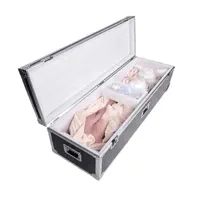
Image guidelines for demonstrating protective packing and flight case transport for museum silicone figures.
Good maintenance cannot make every silicone figure last indefinitely, but appropriate display conditions, careful handling, routine inspection, and suitable transportation can help reduce avoidable wear and preserve the appearance of the replica for longer.
Planning Your Replica Project
A replica project is easier to evaluate when the main requirements are defined before detailed modeling or production begins. The manufacturer does not need every technical answer on day one, but a clear project brief helps establish what needs to be recreated, how the figure will be displayed, and which decisions still require approval.
For museums, memorial projects, private collections, and historical exhibitions, several visual and practical details should be confirmed early.
Prepare a Clear Project Brief
Start with the strongest available references for the person being recreated. These may include photographs, portraits, videos, sculptures, measurements, clothing references, or archival materials.
The brief should also identify the intended figure height, quantity, display environment, and whether the replica will stand, sit, hold an object, or interact with furniture or exhibition equipment.
For scene-based projects, dimensions of important objects should be supplied where possible. A replica designed for a specific chair, desk, display base, or tool should be planned around those dimensions rather than adjusted after production.
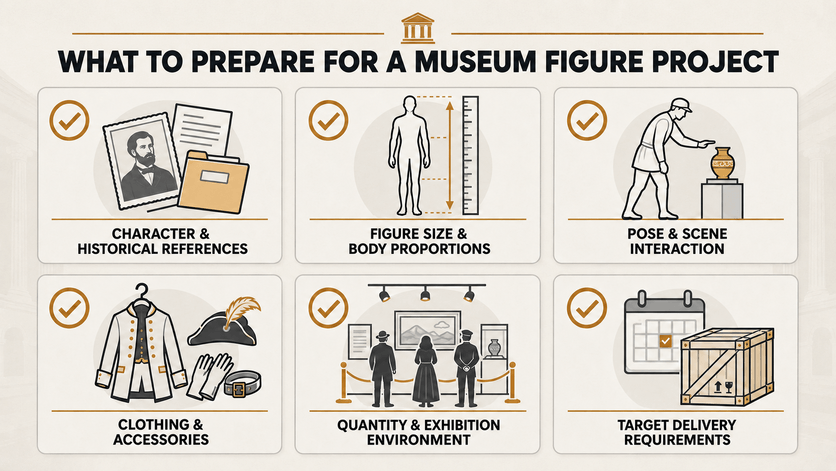
Key information to prepare for a custom museum figure project.
Confirm Age, Pose & Expression
For a person-specific replica, the project team should agree on which version of the person is being recreated before detailed production begins.
This includes the target age, hairstyle, expression, body proportions, clothing period, and overall pose. A memorial family may choose the age at which they remember someone most clearly, while a museum may select the period connected with a specific historical event.
Expression also matters. A formal memorial figure may require a calm, restrained appearance, while a historical working scene may need a different head direction and gaze.
These choices should be treated as part of the approved character direction rather than changed independently later.
Budget, Timeline & Approval Points
There is no single price for every custom replica project. Cost can vary with figure size, quantity, facial customization, pose complexity, hair work, clothing, accessories, structural requirements, packaging, and transportation.
A more complete project brief therefore allows a manufacturer to provide a more meaningful quotation.
Production timing should also be discussed after the project scope is clear. Reference review, 3D modeling, revisions, mold production, silicone manufacturing, painting, hair work, inspection, and shipping all require time.
Projects involving museums or organizations may also require several people to approve the design. It is useful to define who has final approval authority before modeling begins so that conflicting revisions do not delay the project.
Permissions, Privacy & Reference Handling
Person-specific projects can involve sensitive photographs and personal information, especially for memorial or private-family replicas.
Before submitting materials, the client should confirm that they are permitted to provide and use the photographs or other references required for the project. Projects involving living people, celebrities, public figures, copyrighted character material, or commercially used likenesses may require additional rights or permissions depending on the jurisdiction and intended use.
For private projects, clients should also review the XYlover Privacy Policy and ask how reference images, 3D files, project photographs, and approval records will be handled, who can access them, and whether completed work may be used publicly as a portfolio example.
These questions should be clarified before production rather than assumed.
A well-prepared project brief ultimately defines who is being recreated, which version of that person is intended, how the figure will be displayed, what the budget and schedule include, and who must approve the final design.

Recent Posts


Product Categories