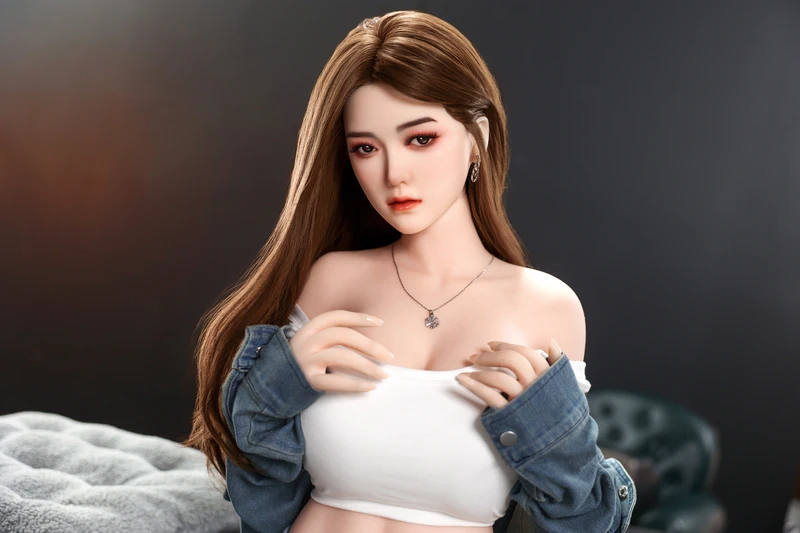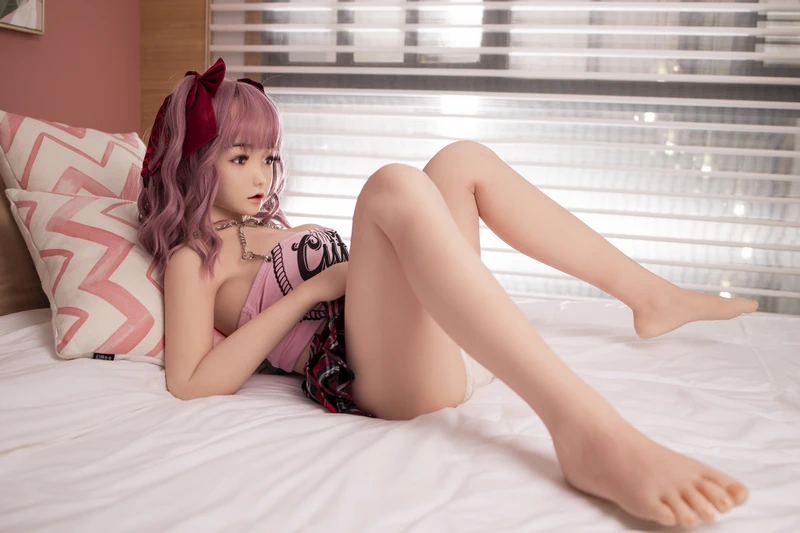
A memorial clone doll is a custom silicone replica created from photographs and visual references to preserve the recognizable appearance of a person in physical form. Unlike a photograph or portrait, it transforms two-dimensional references into a three-dimensional figure that can reproduce facial features, hairstyle, skin tone, body proportions, clothing, and other meaningful personal details.
For families, a memorial silicone replica may provide a tangible way to preserve the appearance of someone important to their personal history. Similar techniques can also be used for commemorative figures, historical reconstructions, museum exhibitions, and other projects where a realistic physical representation is needed.
Creating a silicone replica from photos requires sufficient visual references, careful 3D modeling, mold production, silicone forming, and detailed finishing. The final resemblance depends heavily on the quality of the available photographs and how clearly they document the person from different angles.
A memorial replica should be understood as a crafted representation rather than a replacement for the person it depicts. This guide explains what memorial clone dolls are, what reference materials are needed, how they are created from photos, which personal details can be customized, and what privacy and ethical considerations should be addressed.
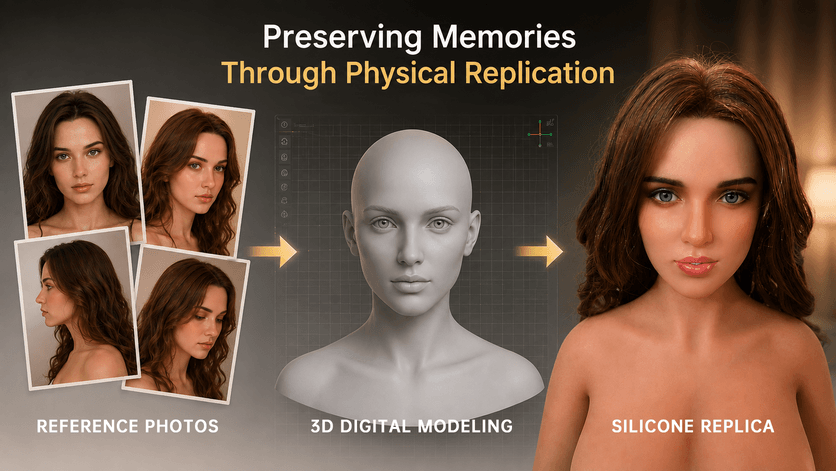
Turning your precious photos into a highly realistic 3D silicone clone doll.
What Is a Memorial Clone Doll?
A memorial clone doll is a customized silicone figure created to preserve the recognizable appearance of a particular person. Depending on the available references and the intended use, it may reproduce only the most identifiable facial features or extend to a full-body representation with customized height, body proportions, hairstyle, clothing, and other personal details.
The term “clone” can sound more literal than the actual manufacturing process. A silicone replica is not a biological copy and cannot reproduce a person’s consciousness, personality, memories, or behavior. It is better understood as a highly customized physical representation created from visual information.
More Than a Standard Custom Doll
A standard custom silicone doll may be designed according to general preferences such as face shape, body type, eye color, hairstyle, or clothing. A memorial project works differently because the design has a specific visual reference.
The question is no longer simply, “What should this figure look like?” Instead, the production team asks, “Which characteristics make this person recognizable?”
That can include the distance between the eyes, the shape of the nose, facial width, jawline, lip contour, hairline, wrinkles, freckles, skin tone, posture, or a hairstyle strongly associated with the person.
Because these projects are reference-driven, the quality and variety of the source material directly affect what can realistically be reproduced.
A Physical Form of Visual Remembrance
People have long used portraits, photographs, busts, statues, wax figures, and other physical representations to preserve appearances. Silicone replication extends this tradition with a material capable of showing fine surface details and realistic skin-like texture.
The result may be kept privately by a family, displayed as part of a personal collection, or used in an appropriate commemorative or educational environment. Its meaning ultimately depends on why it was commissioned and how it is presented.
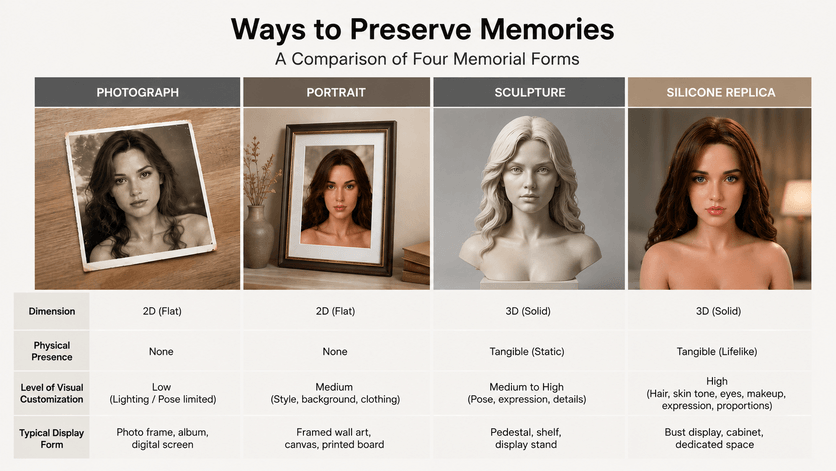
Comparing presence, touch, and realism across different memorial options.
Who Can a Memorial Clone Doll Help Remember?
Memorial replicas are not limited to one type of person or one type of relationship. The underlying idea is to preserve the appearance of someone whose visual identity carries personal, family, cultural, or historical meaning.
The appropriate design, level of realism, and display environment will vary considerably between a private family memorial and a museum reconstruction. Understanding that purpose before production helps determine which references and details deserve the greatest attention.
A Family Member or Loved One
One possible application is a private memorial based on photographs of a deceased family member or loved one. Families may have hundreds of photographs but very few physical objects that reproduce the person’s appearance in three dimensions.
For such a project, familiar details can be more meaningful than creating an artificially flawless face. A particular hairstyle, glasses, smile lines, favorite clothing, or other recognizable characteristics may contribute more to recognition than simply making the figure look “perfect.”
The final replica should therefore be approached as a commemorative representation rather than a substitute for the individual.
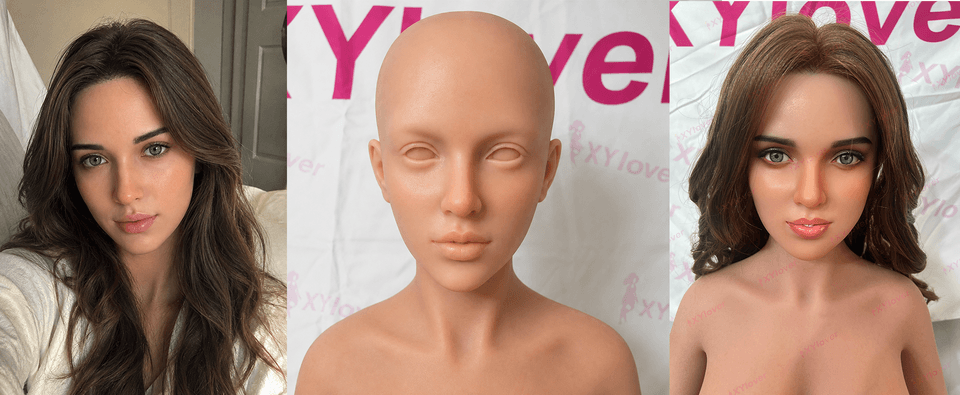
From original photo to finished clone doll: A real custom production journey.
Parents, Grandparents, and Earlier Generations — H3
Older family photographs can also provide references for preserving the appearance of parents, grandparents, or previous generations.
These projects can be more technically challenging because historical photographs may be small, damaged, monochrome, or available from only one angle. If the references do not clearly show the side profile, ears, hairline, body proportions, or skin tone, those details cannot be reconstructed with the same confidence as features visible in high-quality photographs.
In such cases, family members can sometimes provide supplementary references, including photographs from different ages, written descriptions, clothing, approximate height, or other documented characteristics.
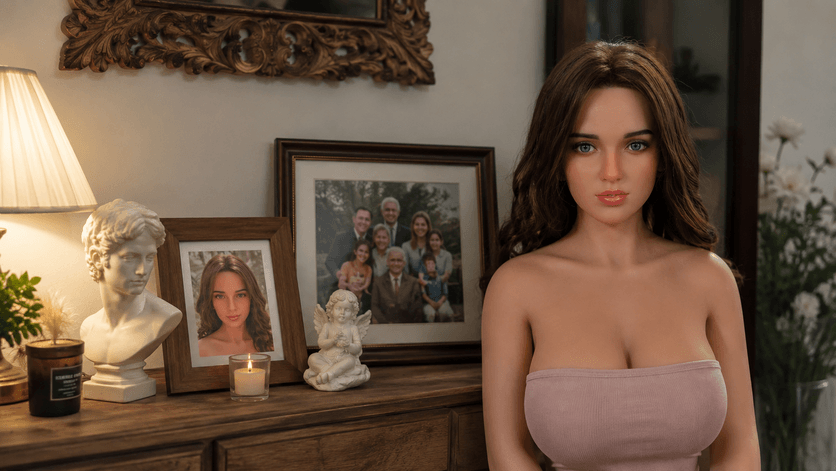
A peaceful home setting featuring a custom silicone replica alongside personal keepsakes.
A Person With Public or Historical Significance — H3
Silicone figures can also be used for commemorative displays involving historical or publicly documented individuals, provided the project has an appropriate legal and ethical basis.
Museums, exhibitions, heritage displays, educational spaces, or private collections may use realistic figures to help audiences visualize a person within a specific historical context. In these situations, accuracy should depend on documented references rather than imaginative reconstruction.
Clothing, hairstyle, age, posture, and environmental context can become as important as facial resemblance.
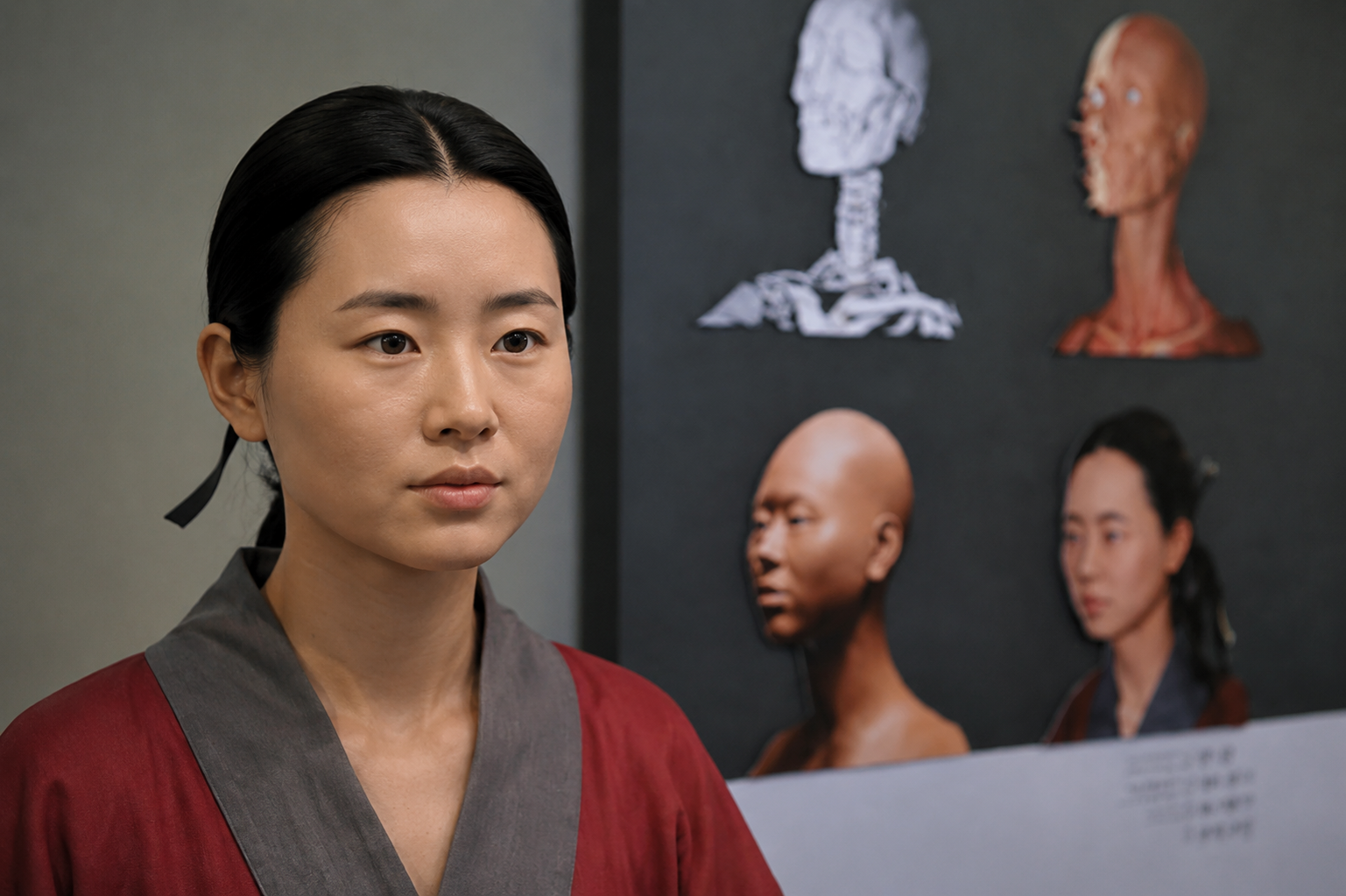
Realistic silicone figures designed for museums, historical exhibitions, and cultural display projects.
A Meaningful Earlier Version of Someone
Not every commemorative replica necessarily represents someone who has died. A person may also want to preserve a meaningful stage of life—for example, a younger appearance documented in family photographs or a particular period associated with an important personal milestone.
This changes the purpose from bereavement-related remembrance to visual preservation.
The same production principle still applies: the manufacturer works from the reference material that represents the specific appearance the customer wants to preserve.
What Do You Need to Create One?
The creation of a recognizable memorial replica starts long before silicone is poured into a mold. The most important first step is collecting useful reference material. More photographs do not automatically guarantee better results. What matters is whether the references clearly reveal the person’s facial structure, proportions, coloring, hairstyle, and other important characteristics.
Clear Photos From Multiple Angles
Whenever possible, prepare clear photographs showing:
- A straight-on view of the face
- Left and right three-quarter views
- Left and right profiles
- The hairline and hairstyle
- A natural facial expression
- Full-body proportions if a full-body replica is required
Images taken in natural or neutral lighting are particularly useful because strong filters, beauty effects, shadows, and wide-angle distortion can change apparent facial proportions.
Recent smartphone photographs can provide excellent references when they are sharp and minimally processed. Older printed photographs can also be used, but the manufacturer should clearly explain which details are visible and which remain uncertain.
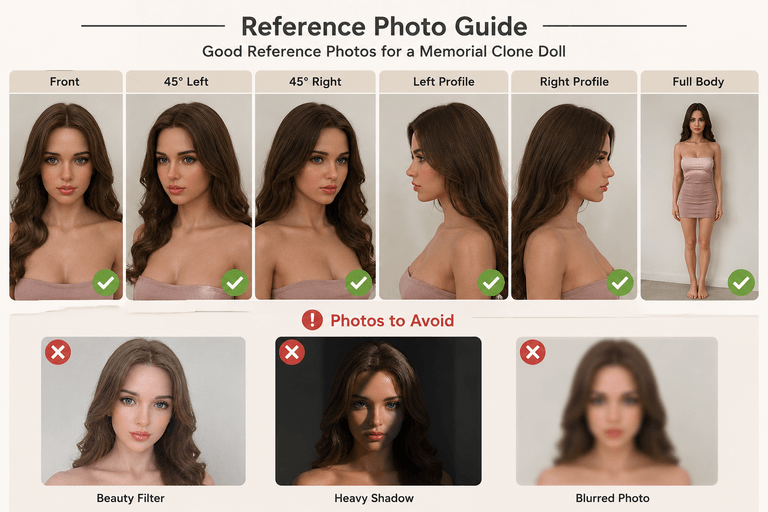
Essential photos needed: Clear front, 45-degree angles, profiles, and full-body shots.
Basic Physical Information
For a full-body memorial figure, photographs alone may not provide enough information about scale. Approximate height, body type, shoulder width, or other known measurements can help establish more realistic proportions. If exact measurements are unavailable, the customer should distinguish documented information from estimates. This prevents uncertain details from being treated as facts during modeling.
Personal Reference Details
Other useful materials may include photographs of glasses, jewelry, clothing, hairstyles, tattoos, birthmarks, or other distinctive visual characteristics. Not every detail has to be reproduced. The best approach is to identify a small number of characteristics that strongly contribute to recognition and personal meaning.Recommended Reference Materials
| Reference Material | Why It Helps | Priority |
|---|---|---|
|
Front Face Photo |
Shows facial proportions and the placement of key features. | Essential |
|
Side Profiles |
Shows nose projection, chin shape and facial depth. | Highly Recommended |
|
Full-Body Photos |
Helps reproduce body shape and overall proportions. | Recommended |
|
Height & Measurements |
Helps establish accurate physical scale. | Recommended |
|
Hair & Clothing Details |
Helps reproduce recognizable personal details. | Optional but Useful |
Not sure if your reference photos are enough?
See how photos and personal details can be used to plan a custom silicone replica.
How Is It Created From Photos?
Turning two-dimensional photographs into a physical silicone replica requires several distinct stages. The exact production workflow can vary by project, but a photo-based custom figure generally moves from reference analysis to digital modeling, mold preparation, silicone production, and detailed finishing.
This is also the stage where customers should understand the difference between documented features and reconstructed features. A photograph shows only what the camera captured. Details hidden from every available image inevitably require interpretation.
Step 1: Reference Analysis and 3D Modeling
The process begins by organizing the supplied photographs and identifying consistent facial characteristics across different images.
A 3D artist can use these references to build a digital model of the head and face. Multiple views are especially important because a front photograph alone cannot accurately reveal facial depth. A side profile provides information about the forehead, nose projection, lips, chin, and back of the head that may not be visible from the front.
During modeling, major proportions should be established before small surface details are refined.
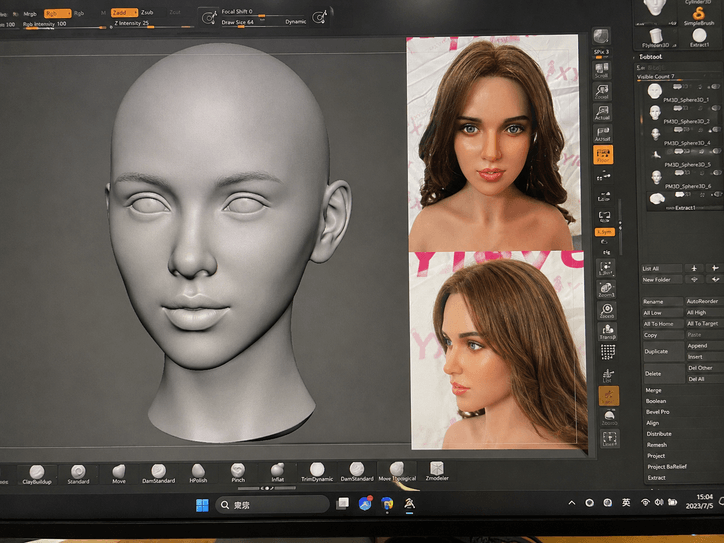
Digital 3D facial modeling matching client photo features.
Step 2: Review and Proportion Adjustments
Before physical production begins, the digital model provides an opportunity to review recognizable features.
This stage is important because changes are easier to make digitally than after mold production. This review stage is especially important when creating a clone doll from photos, because facial proportions must be checked from multiple angles before the project moves into physical production.The face can be compared against the supplied references, and obvious differences in facial width, nose shape, chin position, eye spacing, or other proportions can be corrected.
However, review should not become an attempt to invent detail that does not exist in the source material. When an area is poorly documented, the uncertainty should be acknowledged.
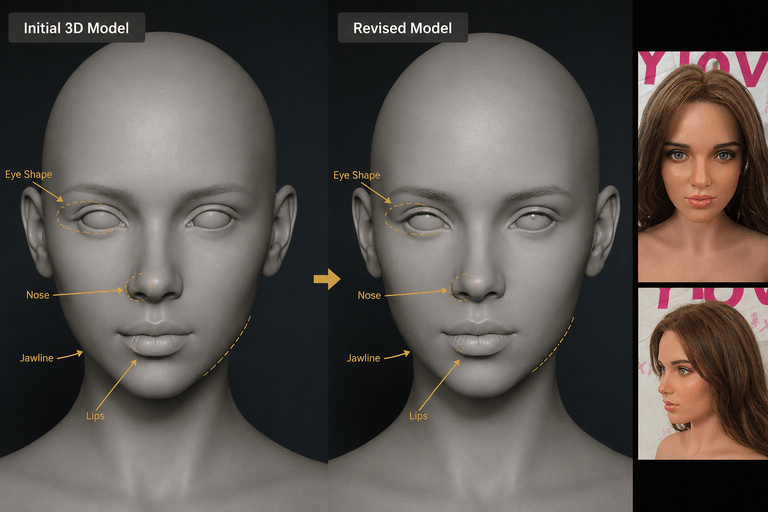
Refining eyes, nose, and jawline contours based on customer feedback.
Step 3: Preparing the Physical Model and Mold
Once the digital form is confirmed, it must be converted into a physical form suitable for mold production.
Depending on the manufacturing workflow, a physical master model can be produced from the finalized digital geometry. The mold then defines the external shape that will later be reproduced in silicone.
This stage determines much of the physical accuracy of the final figure. Errors in the master form or mold cannot simply be corrected through makeup afterward, which is why proportion control earlier in the process is important.
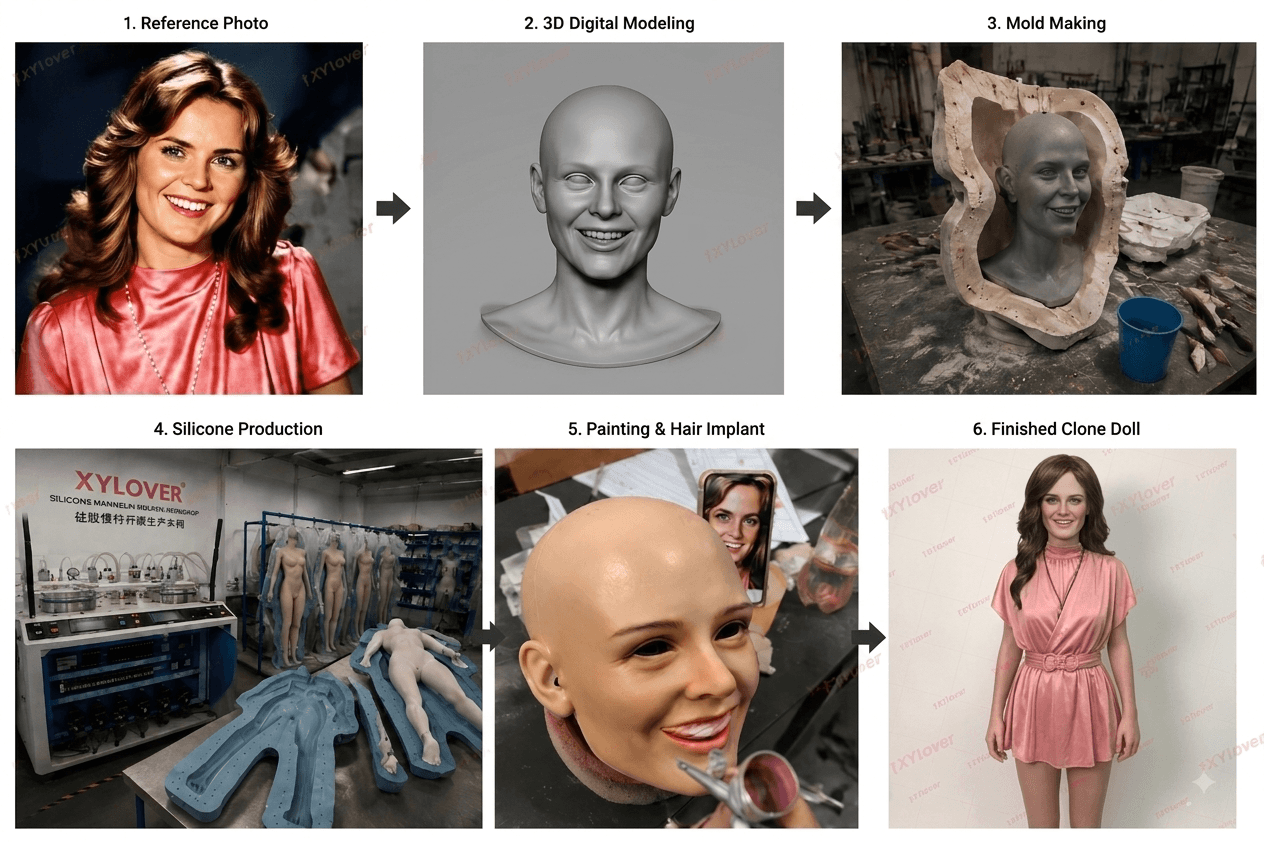
Step-by-step clone doll creation process from photo reference, 3D modeling, mold making, silicone production, and final customization.
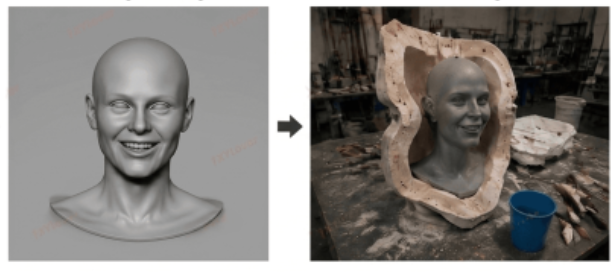
Professional head molding stage in our doll factory.
Step 4: Silicone Forming and Assembly
After the mold is prepared, silicone is used to form the relevant parts of the replica. For a full-body figure, the production process also needs to account for the internal structure, body proportions, and assembly of different components.
Silicone is particularly useful for realistic figures because its surface can reproduce subtle contours and skin-like details. Readers comparing common doll materials can also see our TPE vs silicone comparison for differences in realism, softness, durability, and maintenance.The final visual result, however, depends not only on the material itself but also on molding quality and subsequent finishing.
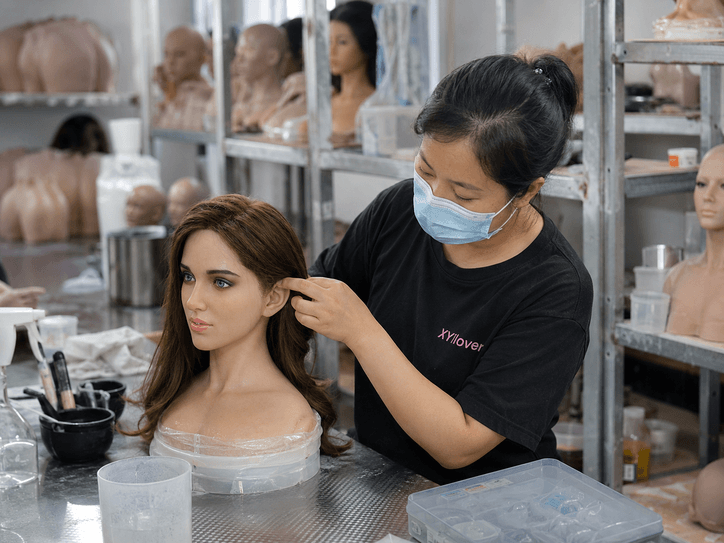
Assembling cured, soft silicone body and head components.
Step 5: Painting, Hair, Eyes, and Surface Details — H3
A newly molded silicone form does not yet contain all of the visual information that makes a person recognizable.
Skin coloration may require multiple tones rather than a single flat color. Subtle variation around the cheeks, lips, eyes, hands, or other areas can make the surface appear more natural. Depending on the project, freckles, moles, age-related details, or other documented characteristics may also be reproduced.
Eyes and hair have a similarly strong effect on recognition. Eye color, eyebrow shape, hairline, hair density, hairstyle, and hair color should therefore be selected according to the available references rather than generic aesthetic preferences.Depending on the project, hair may be implanted or styled with a selected sex doll wig to better match the reference appearance.
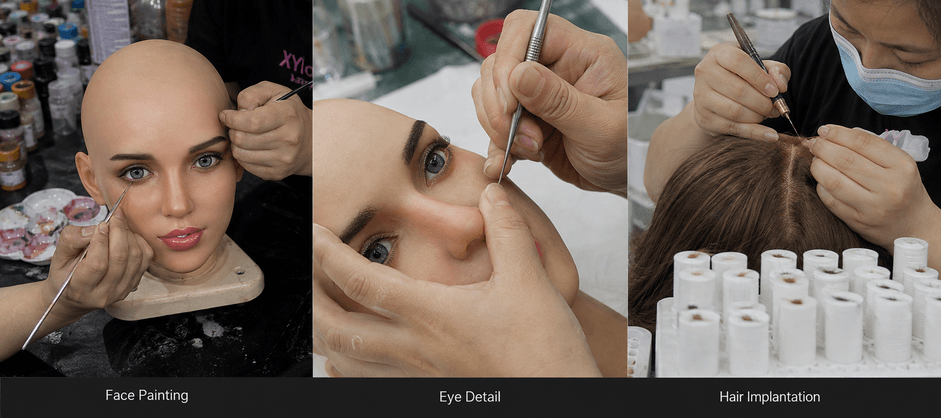
Artisan handcrafting: Multi-layer skin tone, realistic eyes, and individual hair implantation.
Step 6: Final Comparison and Finishing
The finished figure should be compared with the original references as a complete visual object rather than judging individual features in isolation.
At this stage, hairstyle, clothing, accessories, skin finishing, and overall presentation can be checked together. Some small adjustments may still be possible, while structural changes that would require rebuilding the mold are considerably more difficult.
This is why expectations should be established before production: the objective is a carefully crafted physical likeness based on the information available, not an exact duplication of every feature that photographs never recorded.
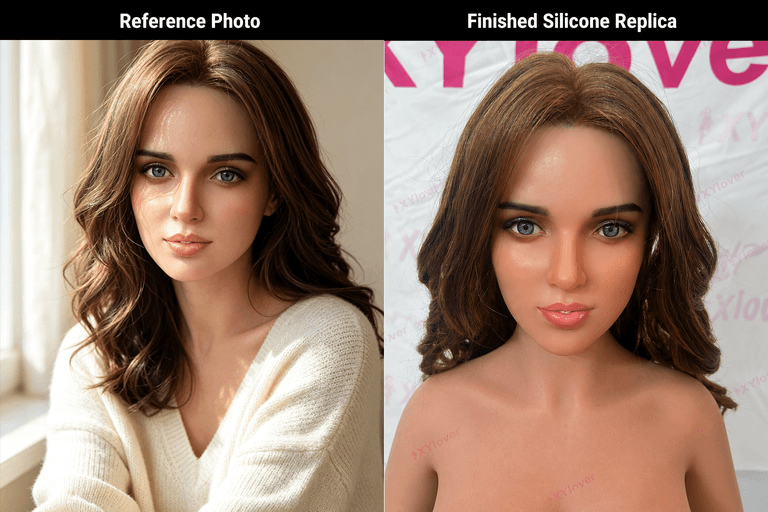
Exceptional similarity in facial likeness, hair color, and expression.
Personal Details That Make It Meaningful
Technical facial resemblance is only one part of a memorial replica. People often recognize someone through a combination of smaller details: a familiar hairstyle, a pair of glasses, a favorite jacket, a particular expression, or an accessory seen repeatedly in family photographs.
These details can transform a technically accurate figure into a more personally recognizable representation.
Clothing and Accessories
Clothing can immediately place a person within a familiar period or memory. Instead of choosing generic garments, customers may use photographs to identify clothing associated with an important occasion, profession, hobby, or everyday routine.
Glasses, watches, jewelry, hats, scarves, and similar accessories can also contribute strongly to visual recognition.
When original belongings are available, their measurements and photographs may serve as useful references. Whether original clothing can actually be used on the replica depends on the dimensions of the finished figure.
Hair, Skin Features, and Age Details
A memorial replica does not always benefit from making the subject appear younger or cosmetically idealized.
Wrinkles, smile lines, freckles, moles, gray hair, a receding hairline, or other age-related characteristics may be part of the appearance that family members remember. Removing them can sometimes make a technically polished figure feel less familiar.
The customer and production team should therefore identify which characteristics are meaningful before finishing begins.
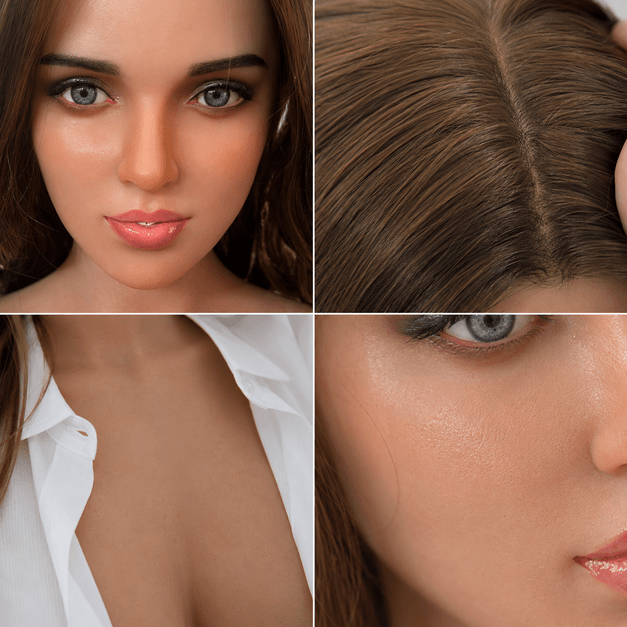
Replicating signature traits: Custom hair, glasses, clothes, and natural skin texture.
Recreating a Familiar Presentation
Presentation can also affect how a replica is perceived. A figure intended for a family memorial might be dressed in familiar everyday clothing, while a museum figure may require historically documented garments and a carefully researched display environment.
Many of these appearance choices are also available through broader custom sex doll options, including choices related to body proportions, skin tone, hair, eyes, clothing, and other appearance details. A memorial project, however, is more reference-driven because these choices are typically based on the appearance of a specific person rather than personal preference.
The objective is not to add as many custom features as possible. It is to select the details that carry the strongest connection to the intended memory or historical identity.
Respect, Privacy and Ethical Considerations
A memorial replica can involve highly personal photographs and the likeness of a real individual. For that reason, technical feasibility should never be the only consideration.
Privacy, authorization, dignity, and intended use should be discussed before a project moves into production.
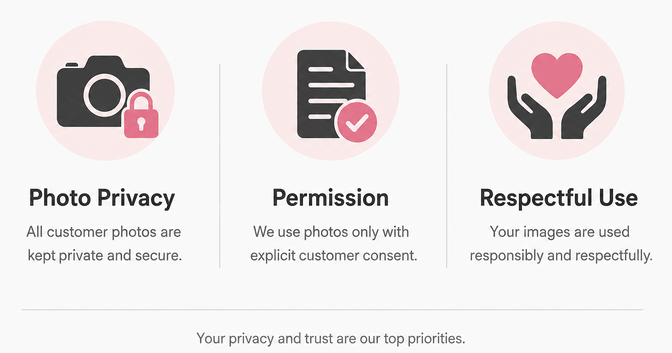
Guaranteed photo protection, strict permission controls, and respectful handling.
Protecting Personal Reference Materials
Customers may provide photographs that were never intended for public distribution. Manufacturers should therefore treat reference files as sensitive project materials and clearly explain how photographs are received, stored, accessed, and used during production.
Customers should also ask whether their images or finished replicas may appear in portfolios, social media, advertising, or case studies. Private production and public promotional use are separate forms of permission.
Permission and Rights Matter
The fact that an image can be found online does not automatically mean it is appropriate to reproduce a person’s likeness.
Rights relating to photographs, publicity, privacy, estates, intellectual property, and commercial use vary by jurisdiction and by the circumstances of the project. Projects involving celebrities, public figures, copyrighted characters, or commercial exhibitions can raise additional issues.
When rights or authorization are uncertain, appropriate legal guidance may be necessary before commissioning or publicly displaying a replica.
Respectful Expectations
A memorial silicone figure should be presented for what it is: a crafted physical representation.
It cannot reproduce a person’s consciousness, memories, emotions, or identity. Manufacturers should avoid making claims that suggest otherwise, and customers should receive a clear explanation of what visual replication can and cannot achieve.
Respectful production means balancing resemblance with realistic technical limitations and treating the represented individual as more than a collection of visual features.
From Private Memorials to Museums
The same core technology used to create a private memorial replica can also support broader commemorative, cultural, educational, and exhibition applications.
What changes is the source material, required level of documentation, and context in which the finished figure will be displayed.
Private Family Memorials
For a private project, the most important references may come from family photographs and personal knowledge.
The finished replica may be kept in a private room, collection, or dedicated memorial space. In this setting, emotional familiarity may matter more than reconstructing every detail according to formal historical standards.
Historical and Museum Exhibitions
Museums and historical exhibitions operate under different requirements. A realistic silicone figure may be used to help visitors visualize a historical person, occupation, event, or period, but the reconstruction should be supported by reliable evidence.
Historical portraits, archival photographs, documented measurements, clothing records, written descriptions, and period artifacts can all contribute to a more defensible reconstruction.
For museum and exhibition projects, the production process may also involve reconstructing period-specific clothing, facial characteristics, hairstyles, and other documented details. Our guide to custom silicone figures for museums and historical exhibitions explores how these realistic figures can be developed for educational, commemorative, and historical display environments.
If certain visual characteristics are unknown, exhibitions should avoid presenting speculative details as established historical fact.
Realistic silicone figures designed for museums, historical exhibitions, and cultural display projects.
Commemorative and Educational Displays
Realistic silicone figures may also appear in commemorative halls, cultural exhibitions, educational displays, or themed historical environments.
In these contexts, the figure is only one component of interpretation. Photographs, documents, artifacts, captions, and environmental design provide the context that explains who the person was and why the representation is being displayed.
A successful project therefore requires more than manufacturing realism. It requires an appropriate relationship between the physical replica and the information surrounding it.
Recent Posts


Product Categories